
Memorial Houston Medical
Role
Client
Services
Timeline
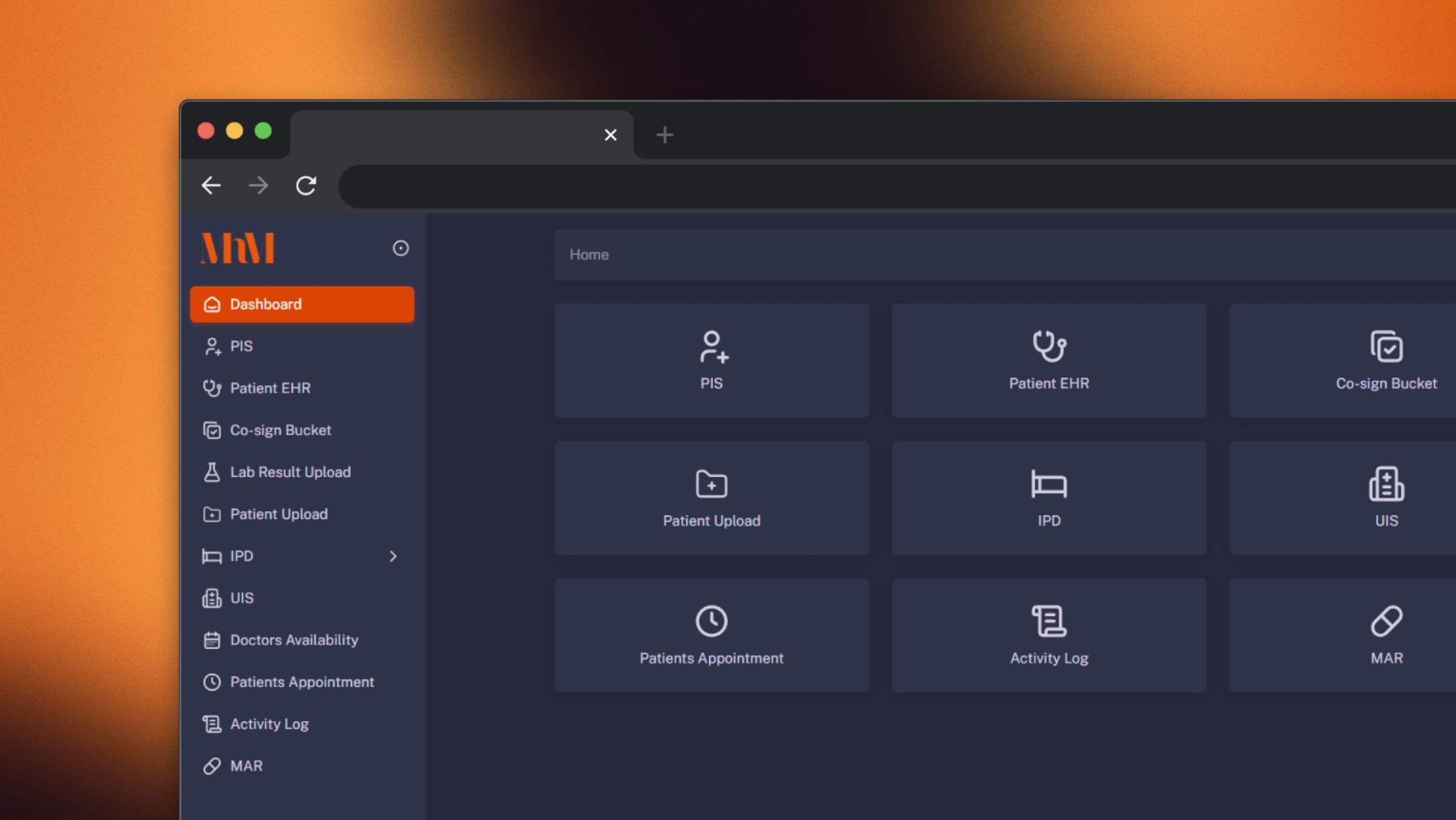
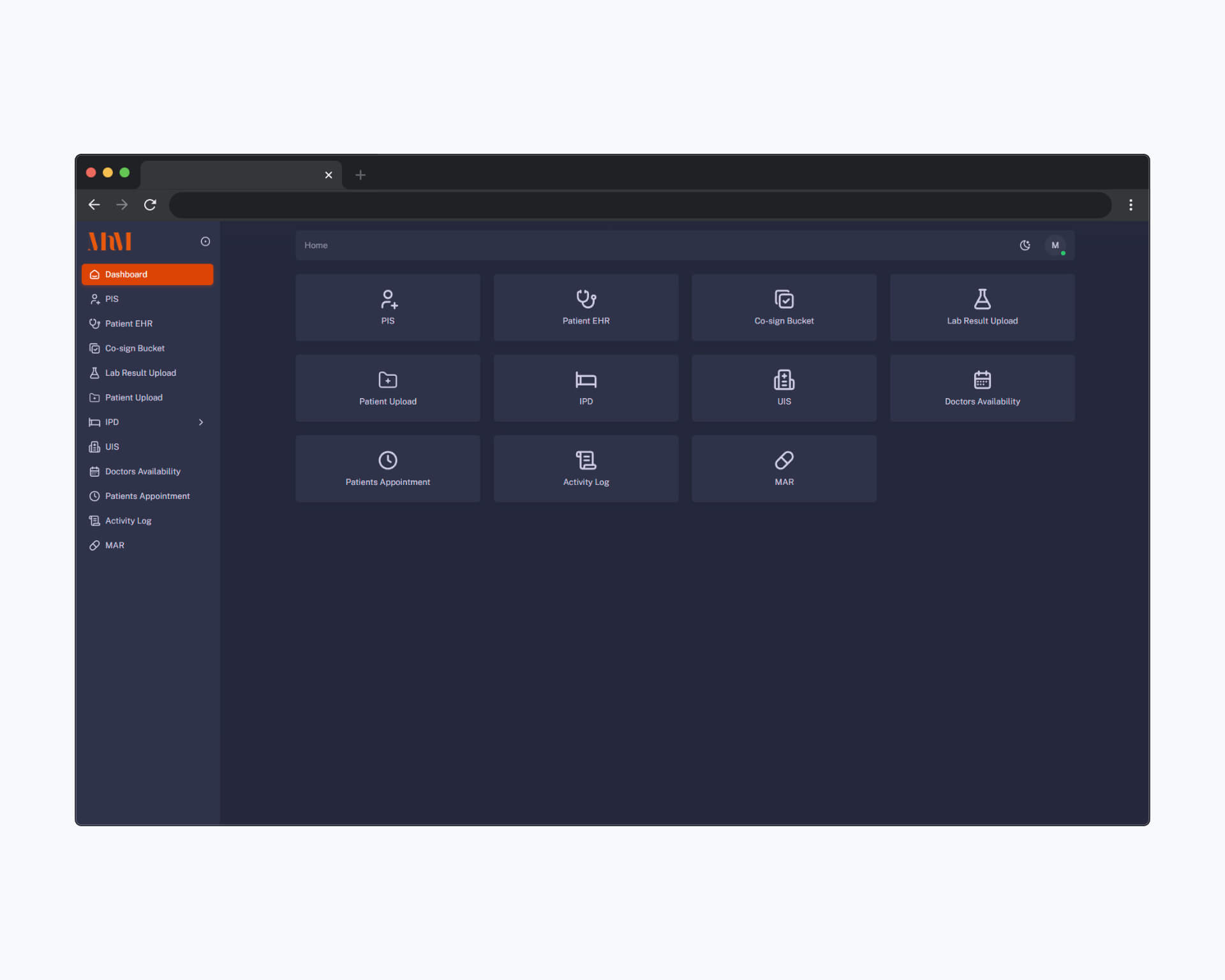
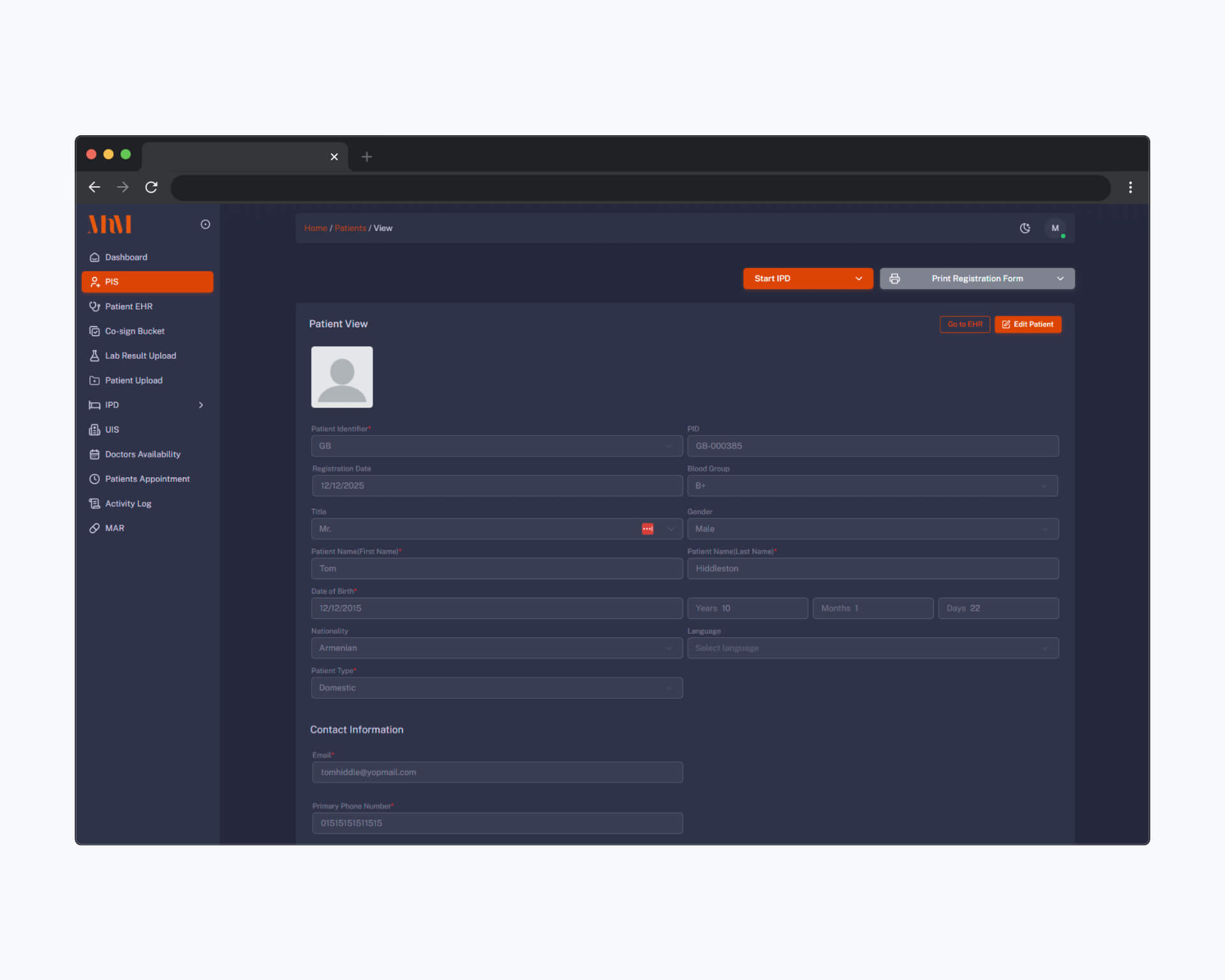
Hospital Management System dashboard and core clinical modules used daily by doctors, nurses, and administrative staff. The platform covered the full patient journey—from registration and appointments to EHR, lab uploads, inpatient management, medication administration, and audit logging. The key challenge was balancing speed and safety in a high-pressure environment where users must complete tasks quickly without missing critical clinical information.
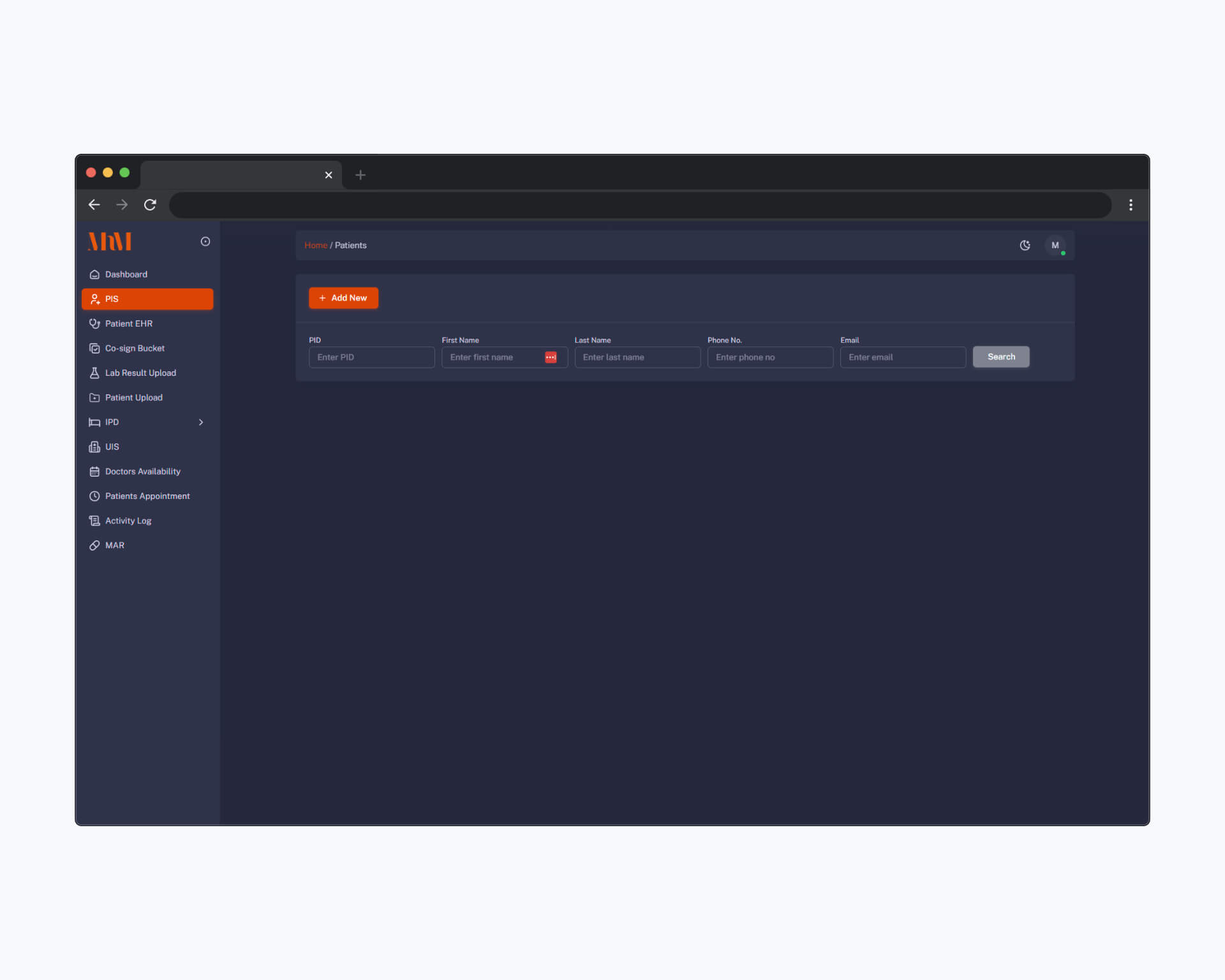
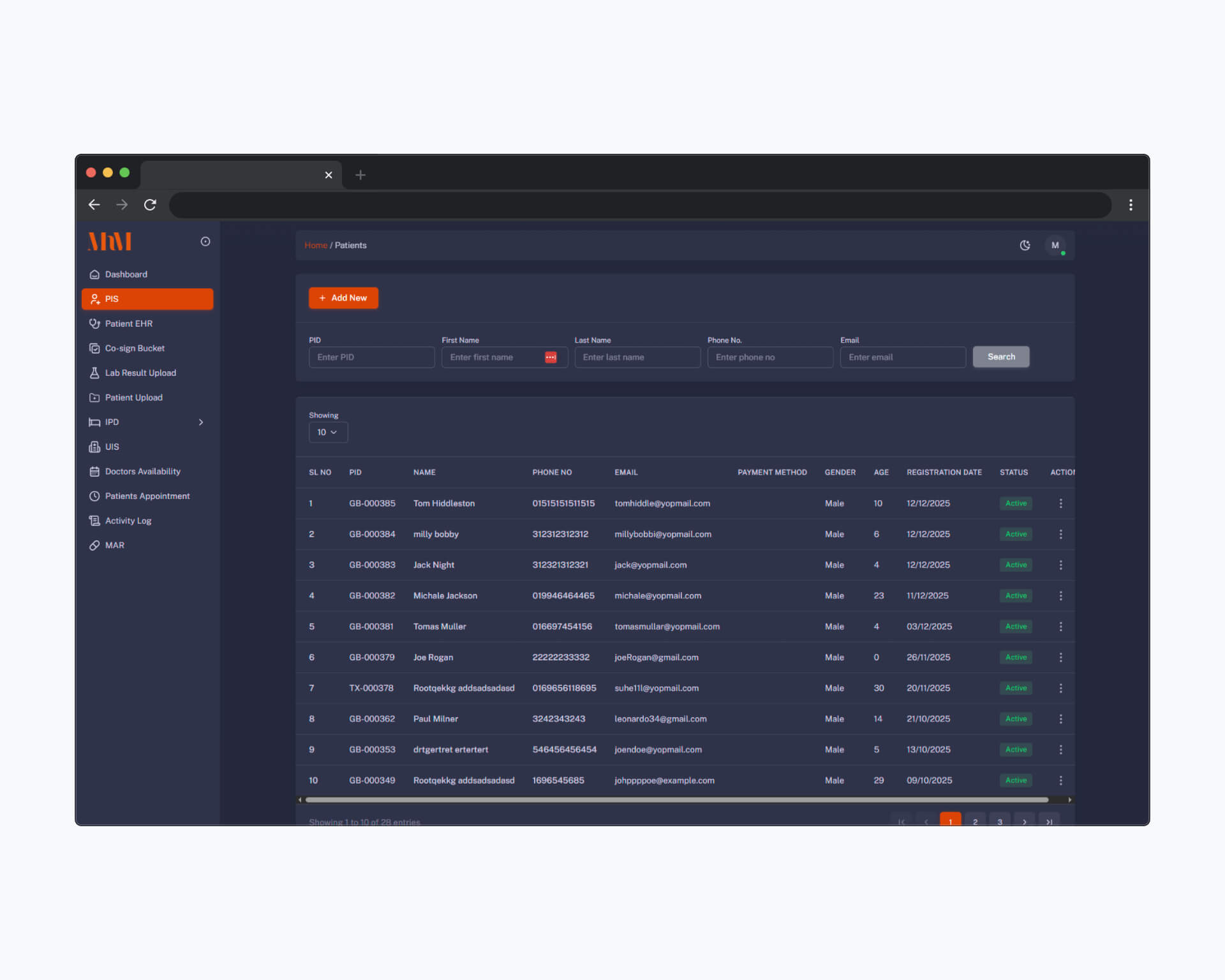
Structured the system around a dashboard-first experience that gives users a clear mental model of the platform. A centralized card grid helped staff move between modules without deep menus. Each module was designed around its real workflow: fast entry in PIS, high-readability clinical views in EHR, queue-based approvals in the Co-sign Bucket, status-driven lab uploads, ward-level visibility in IPD, and alert-focused interaction patterns in MAR to reduce medication errors. Across the platform, I used consistent layouts, clear hierarchy, and predictable navigation to reduce confusion during busy shifts.
Rebuilt core hospital workflows across registration, EHR, inpatient, and medication modules, resulting in 70%efficiency gains and 50% error reduction.
This screen lists shipments that are not yet fully booked because key details are missing or confirmation is still pending. It helps users catch incomplete booking information early- before it creates delays later in delivery or documentation. Each record is structured so teams can quickly check what’s missing, update it, and move the shipment forward without switching systems or searching manually.
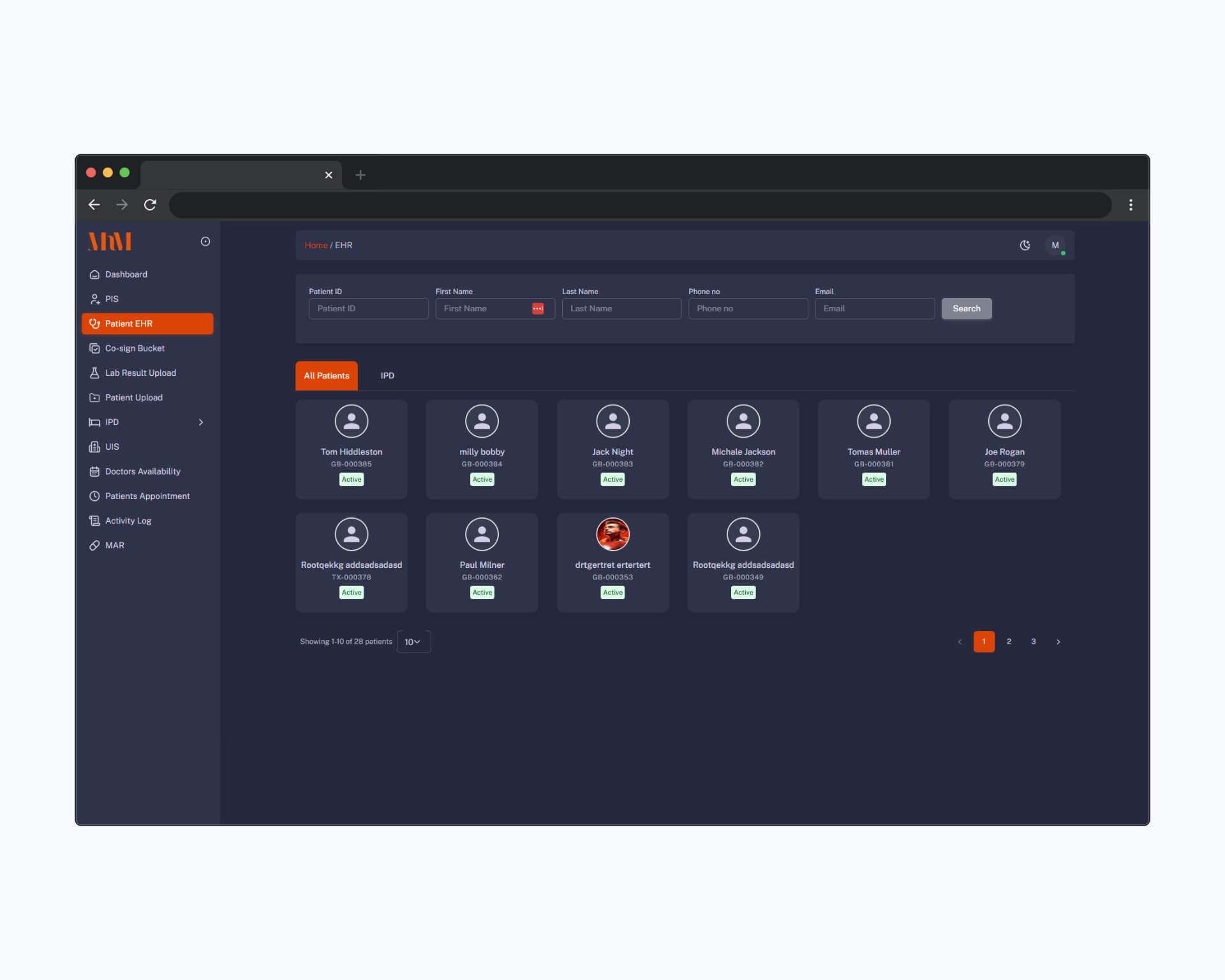
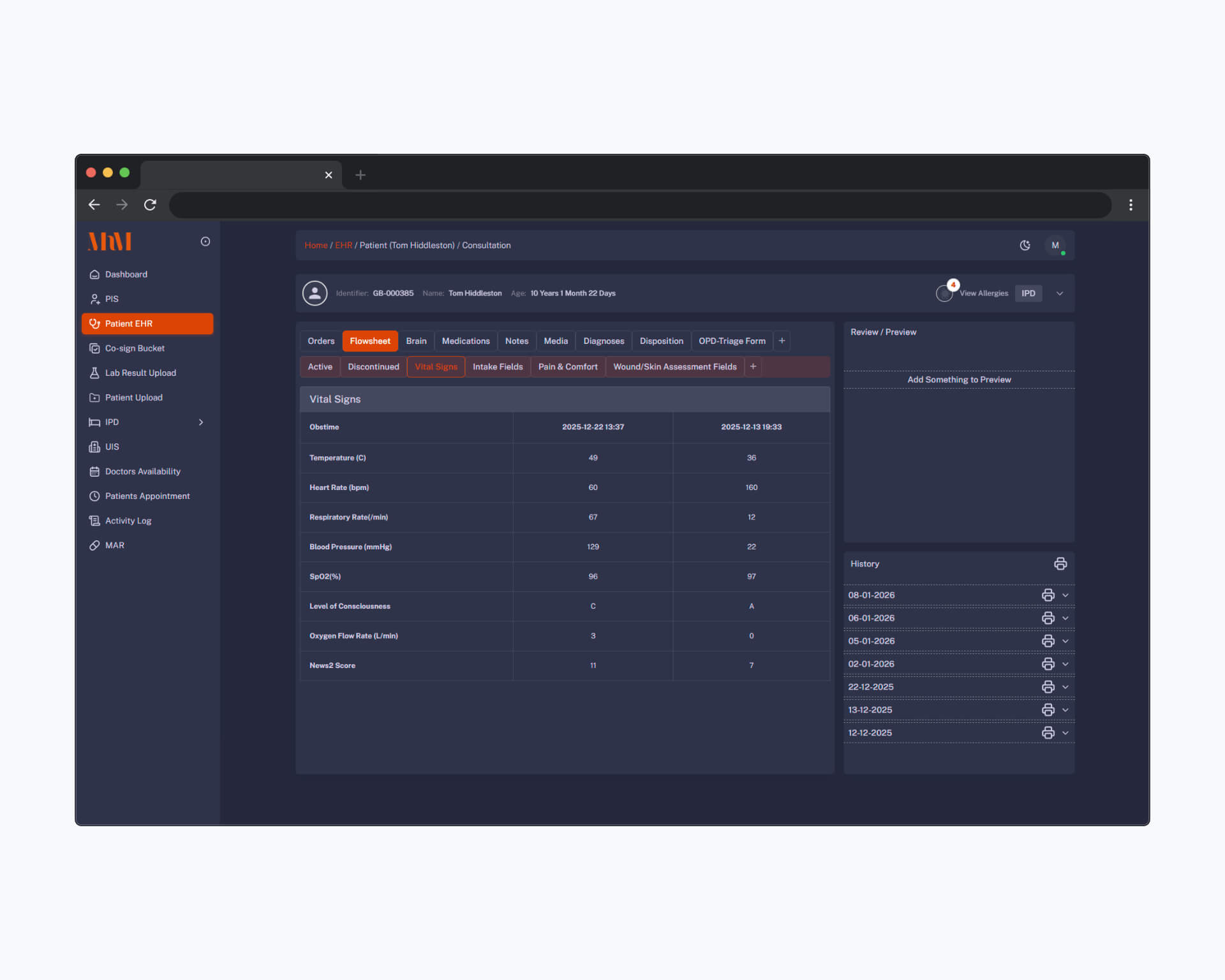
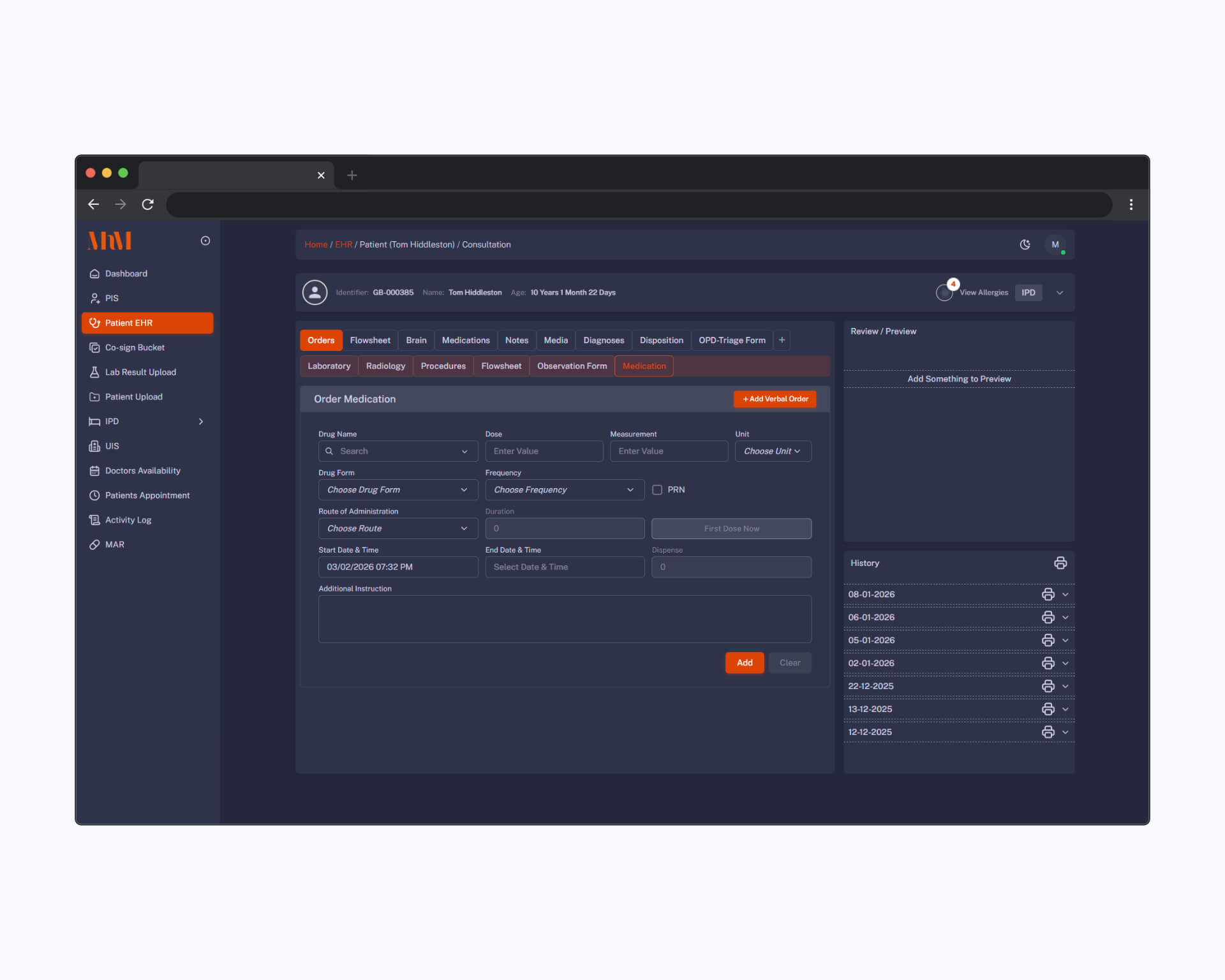
The heart of clinical operations, the EHR module is built for information density and readability. The UX focus here is on the longitudinal view of patient health—medical history, allergies, and progress notes. The design ensures that critical clinical data is prioritized in the visual hierarchy to support fast, informed decision-making during patient rounds.
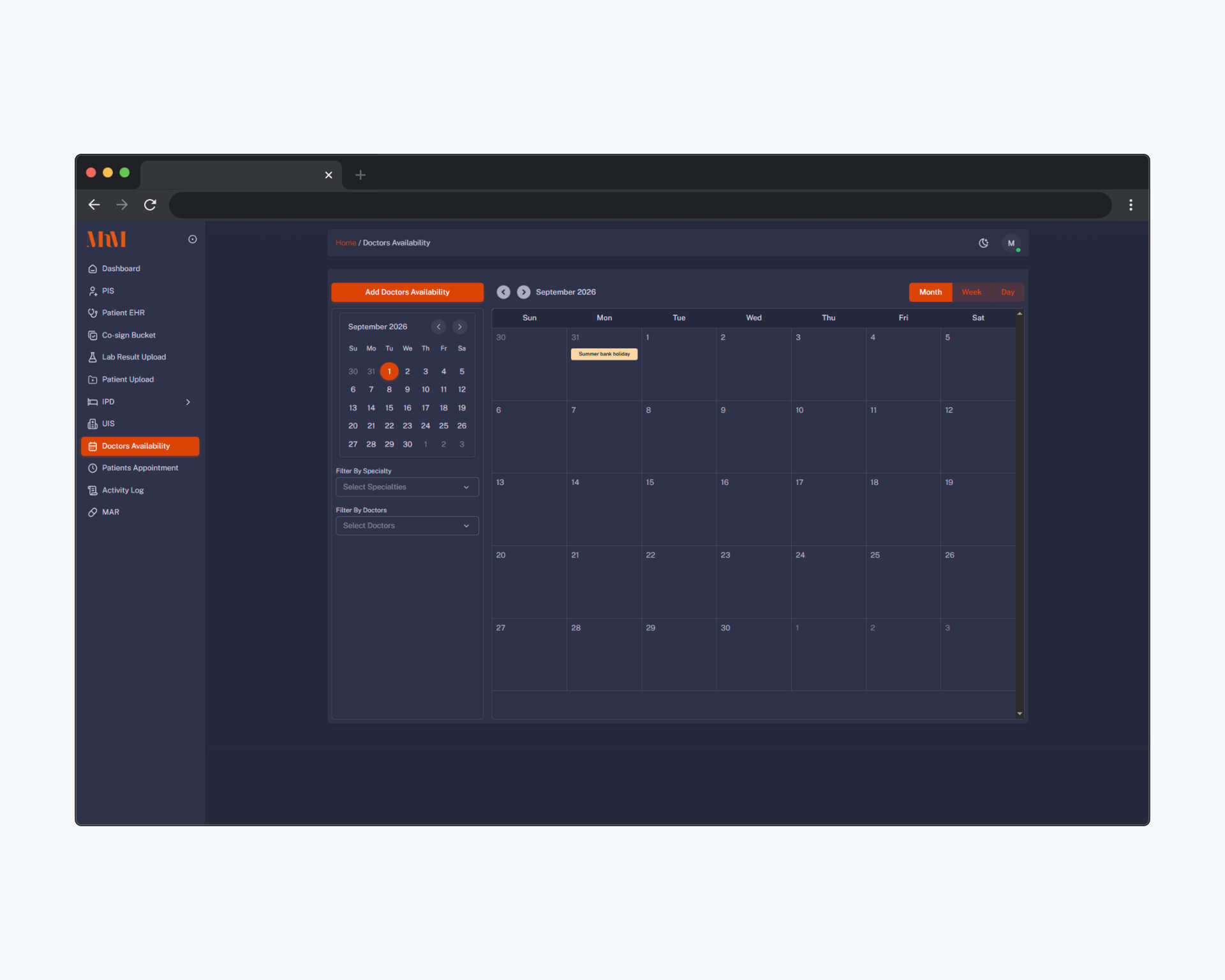
This is a resource scheduling module designed to bridge the gap between patient demand and clinical supply. The UI likely utilizes a calendar-based or grid view to show real-time shifts. The UX goal is to reduce "scheduling friction," ensuring that appointments are never booked against an unavailable physician.
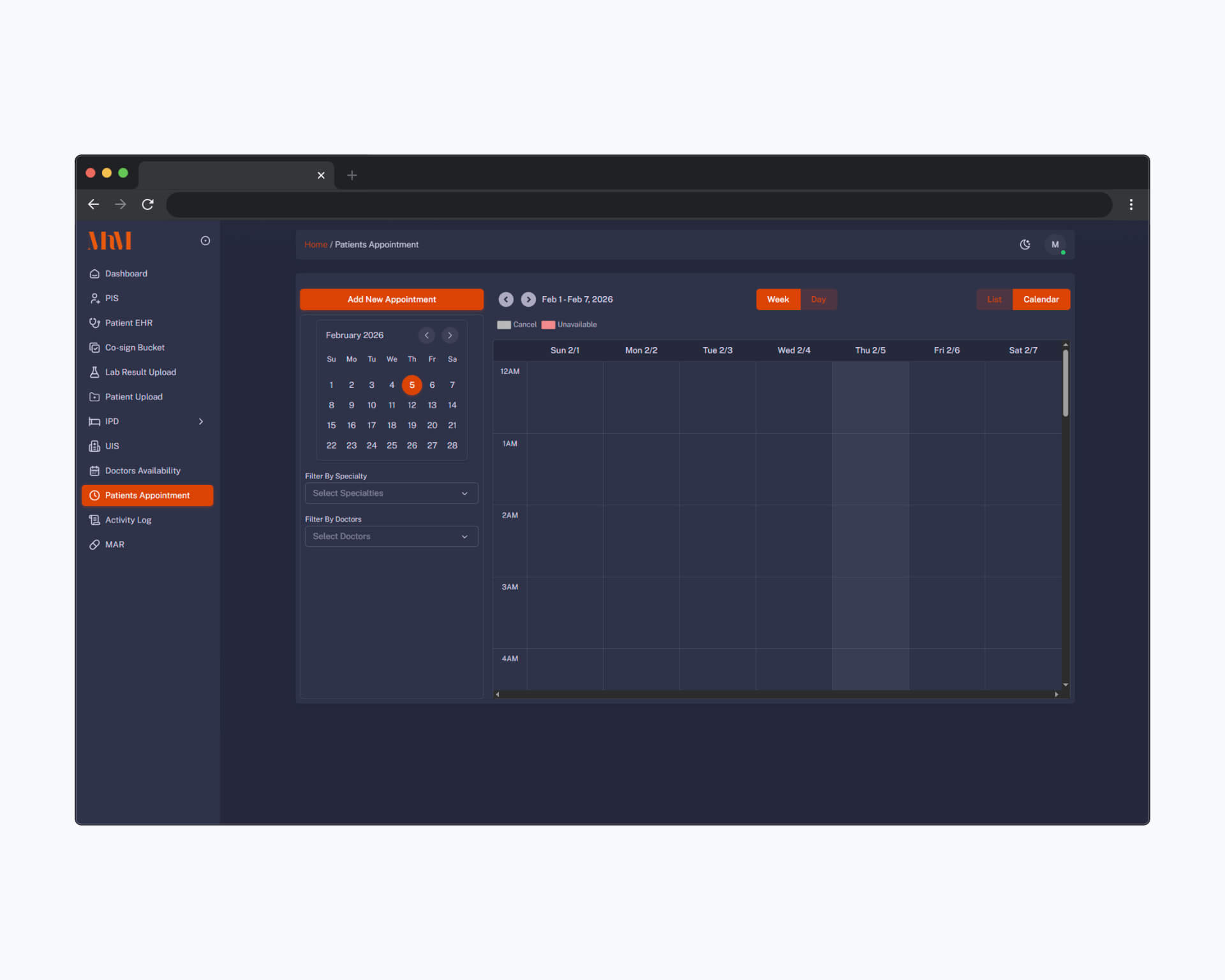
Focusing on outpatient flow, this module manages the clinic’s daily schedule. The UX emphasizes "time-slot visibility" and "check-in status." By providing a clear timeline of the day's expected traffic, the interface helps administrative staff manage waiting room expectations and physician pacing.
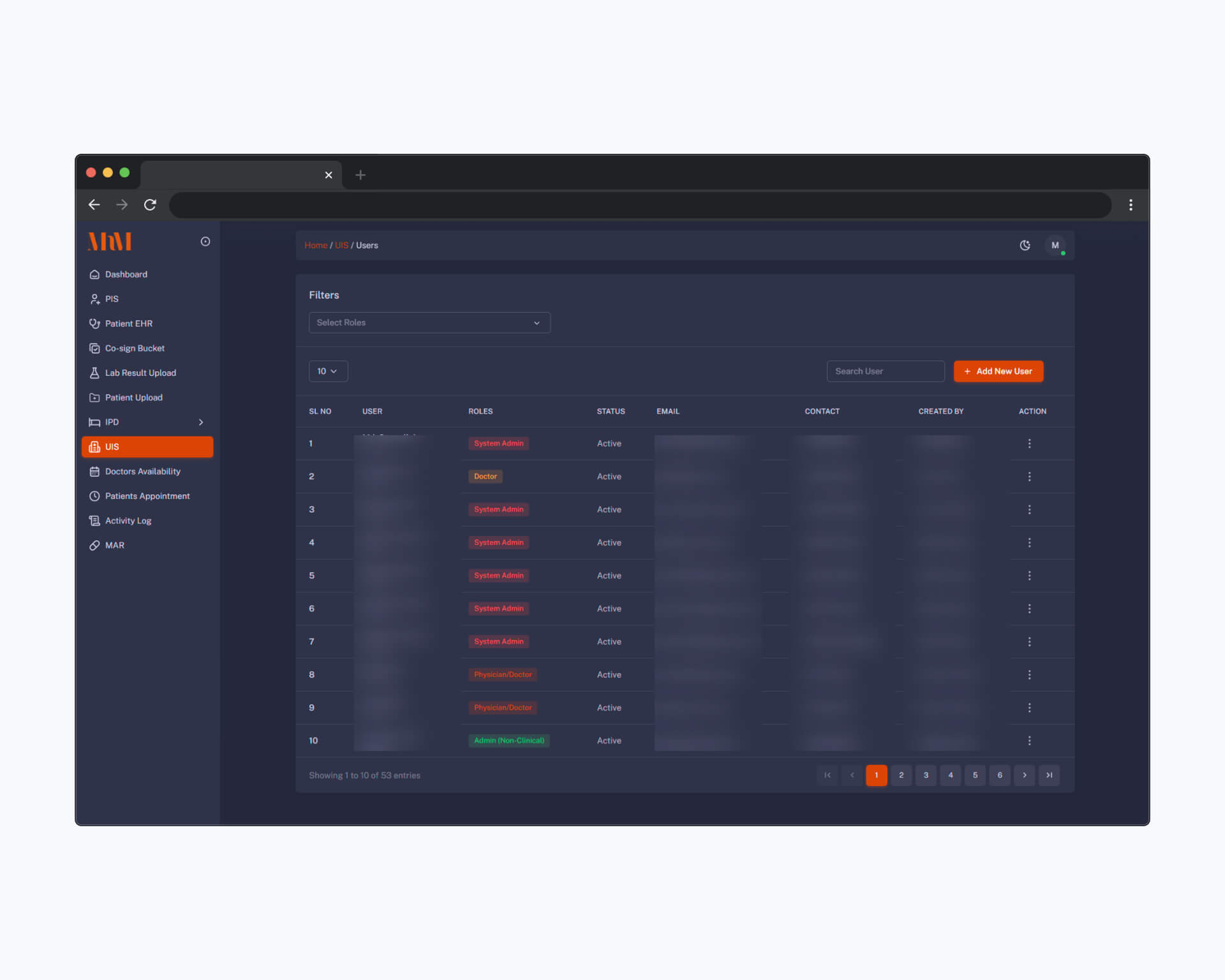
Orders is the main list view where users track order-level progress from creation to completion. It supports search, filtering, and quick review so teams can find an order instantly—even in high-volume operations. Each order includes key status indicators that show where it stands in the workflow and what actions are still required. This screen reduces dependency on manual tracking spreadsheets and improves visibility across the supply chain process.
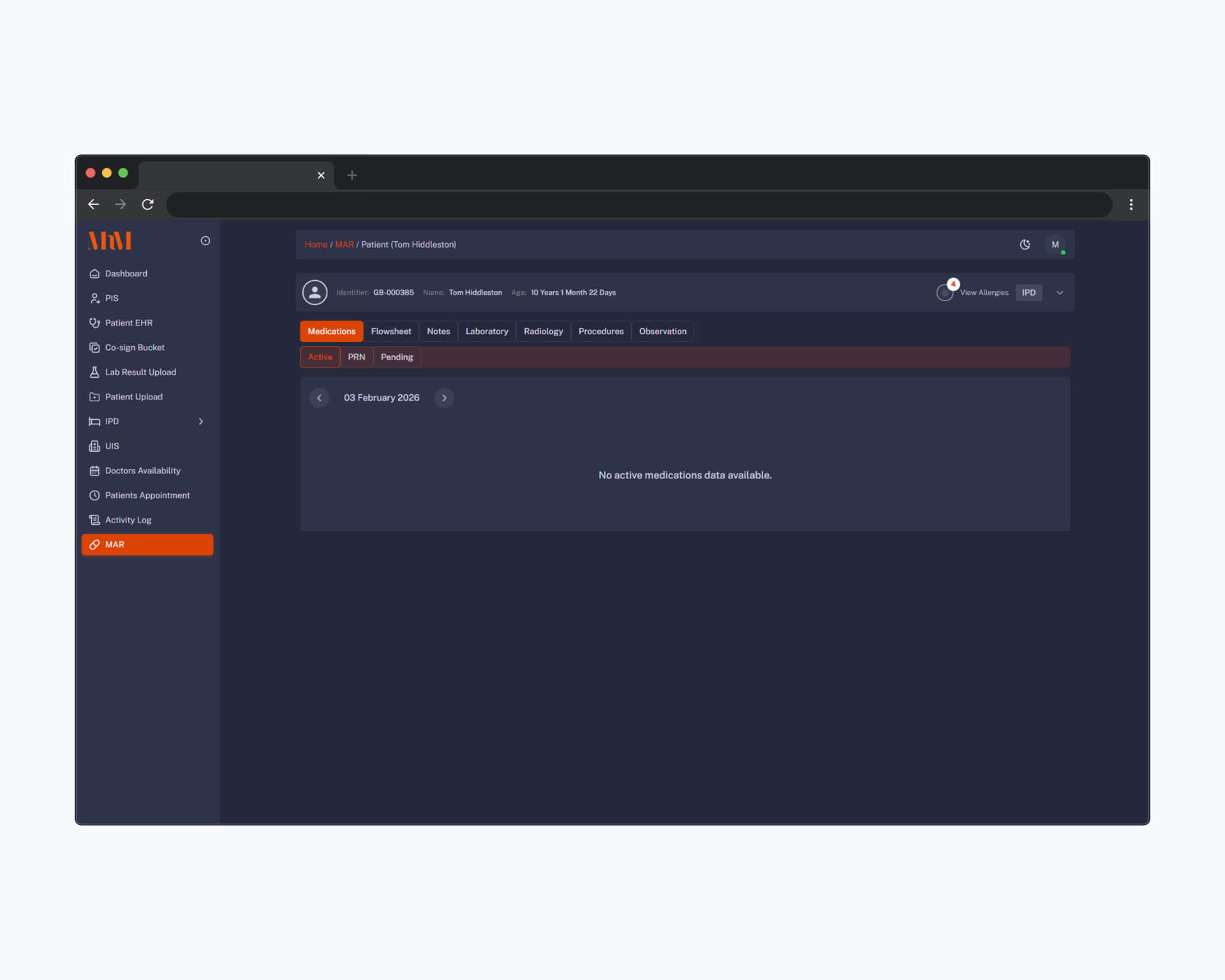
The MAR is a high-risk clinical module where "error prevention" is the primary UX goal. It tracks the 5 Rights of Medication Administration: Right Patient, Right Drug, Right Dose, Right Route, and Right Time. The UI is designed to be "alert-forward," using visual cues to highlight overdue doses or potential drug interactions.
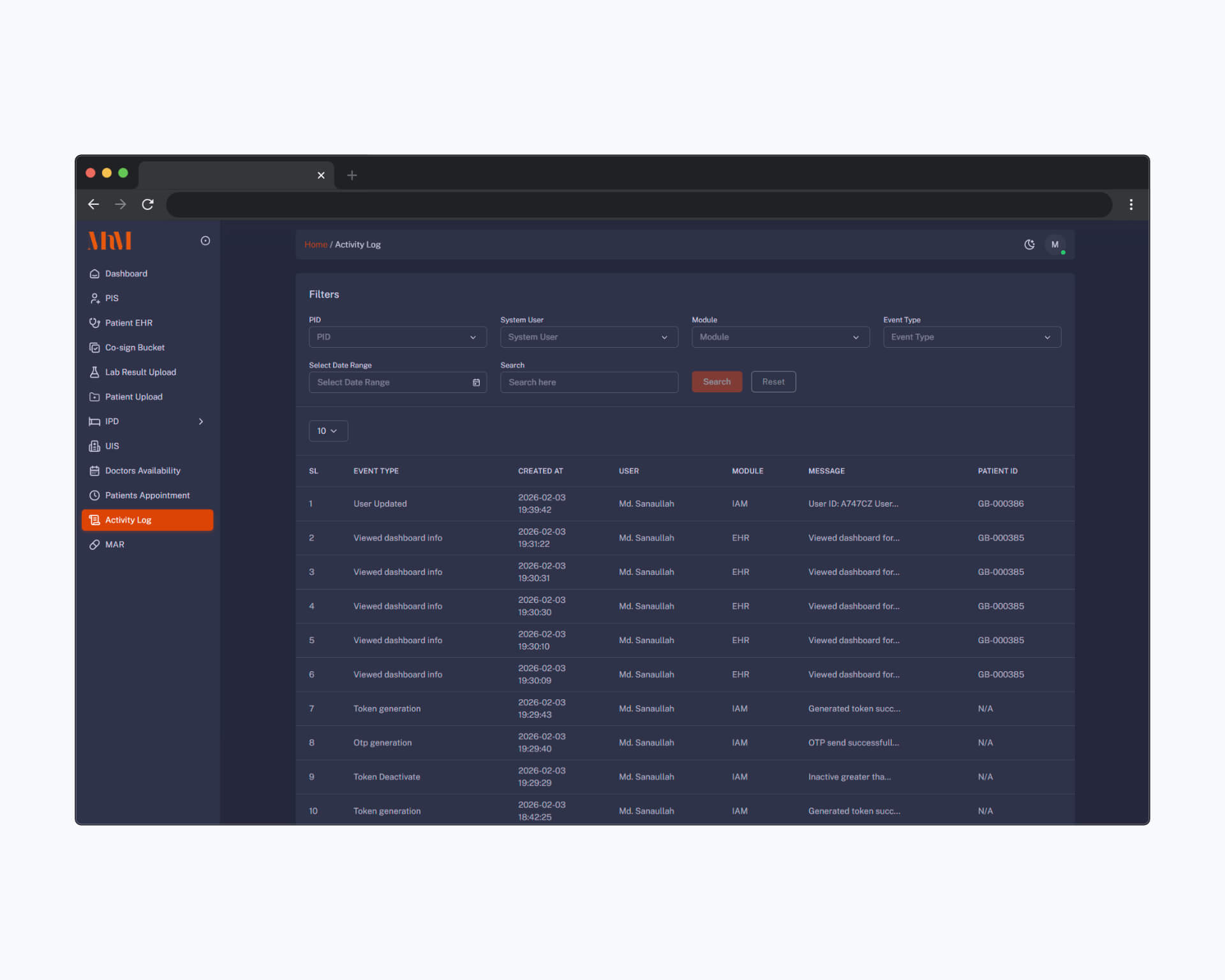
An essential tool for security and auditing, the Activity Log provides a transparent trail of every action taken within the system. From a UX perspective, this is a "search and filter" interface that allows administrators to investigate discrepancies, ensuring HIPAA-level accountability across the platform.
Let’s collaborate to transform your ideas 💡 into impactful, user-centered designs that deliver meaningful results and elevate your digital presence.